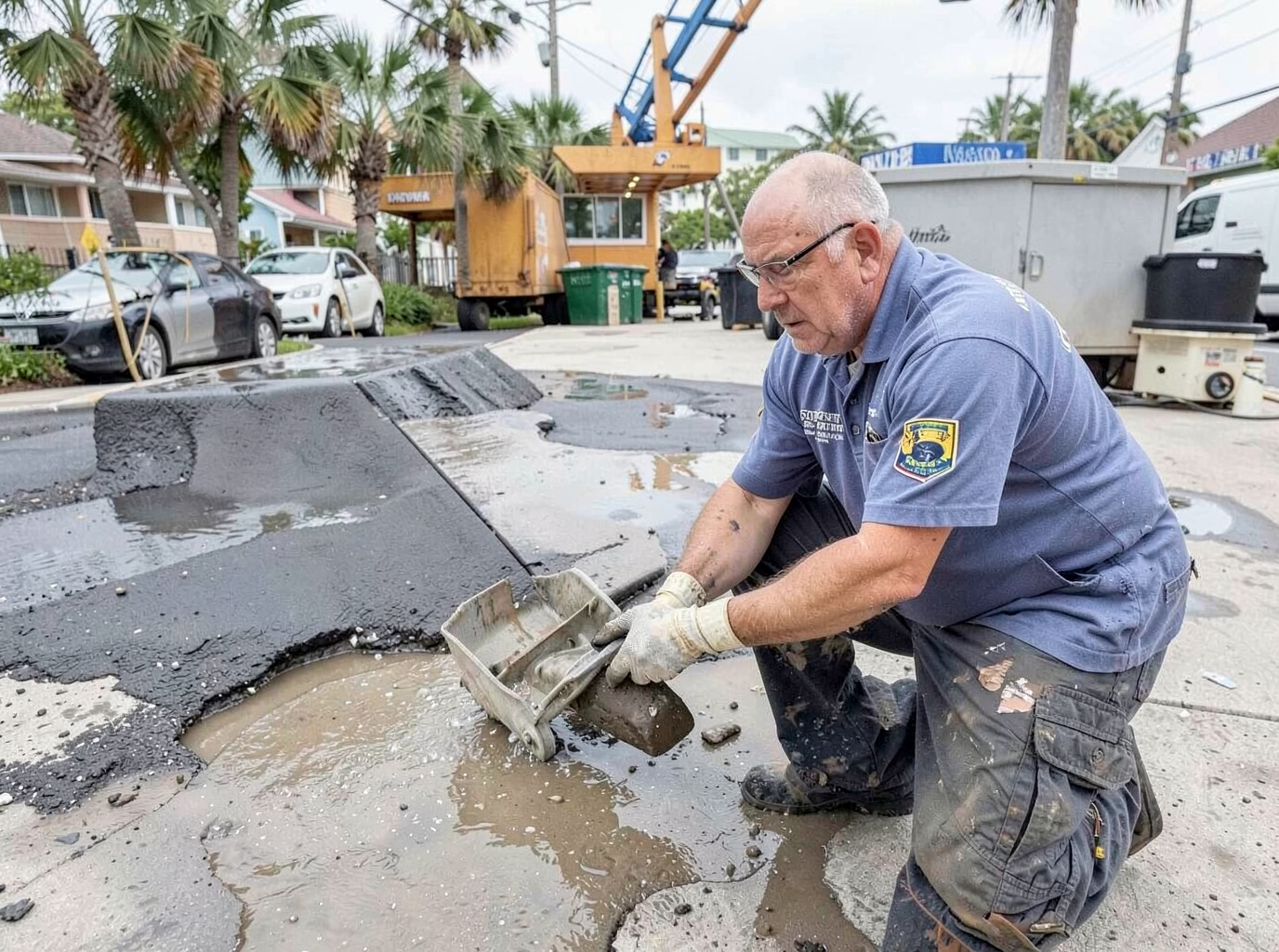
Why Boynton Beach Homeowners Choose Us for Water Damage Restoration
Every water damage job starts at the source. Before anything is dried or opened up, the work is to find and stop where the water is entering, because drying a structure that is still taking on water wastes the whole job. Leak detection is part of this service, not an add-on, so the first question on every call is where the water is actually coming from.
Extraction and drying are checked with moisture readings rather than guesswork. A surface can feel dry while water is still trapped under flooring or inside a wall cavity. Readings taken at assessment, during drying and again before equipment is removed show whether materials have reached the target levels. Where a reading is still high, the work continues.
Findings are documented for the homeowner's records. That means photographs of the damage as found, the moisture readings, the drying logs and a written note of the leak source, or of the fact that the source has not yet been confirmed. Homeowners who deal with an insurer or a contractor later have a clear record to work from.
Floodplain honesty matters for some Boynton Beach addresses. The City of Boynton Beach Building Division requires a permit for development inside the Special Flood Hazard Area, and the City's definition of development includes repair. If your property sits in that area, we tell you so at the start, explain what the permit perimeter covers, and explain the 50% rule that can change how a flood repair is scoped. We would rather you hear that before work begins than after.
Why Water Damage in a Boynton Beach Home Should Not Wait
Standing and trapped water keeps working on a home long after the visible puddle has been mopped up. During the first 24 to 72 hours, water soaks into baseboards, subfloor and drywall, and the materials begin to swell and lose their structure. Wood can delaminate, adhesives can fail, and the building can start to give off a stale or sour odour as organic materials break down.
Moisture that stays in the structure also creates conditions for microbial growth. Growth is a risk to plan around, not something a homeowner can judge by eye. Once materials stay damp long enough, the concern moves from the floor to the air the household breathes, which is why early drying and early documentation both carry weight.
Hidden water is the reason the visible puddle is a poor guide. Water can run down inside wall cavities, under vinyl plank, under tile and beneath carpet pad, and it can sit there well after the surface looks dry. A home that appears fine on the first day can still hold a large volume of moisture in places nobody can see. Measuring those places is how the true extent of the loss is found.
Outside water is treated differently from a clean supply-line leak. Storm and tidal water is handled as Category 3 water, which is the highest contamination class. It can carry silt, debris, sewage and other contaminants, so the materials it has touched are handled with more care, and some cannot be dried in place. A clean water-heater leak is usually Category 1. The two may leave the same wet floor, but they are different jobs with different steps.
Proof: How a Restoration Is Scoped and Verified
A restoration is scoped from measurements, not impressions. The assessment begins with moisture mapping, using meter readings taken across the floor, walls and cavities, and the readings are recorded with their locations. Photographs of the damage are taken as found, before anything is moved, cut or removed.
Extraction comes next. Standing water is removed first, and then water is pulled from carpet, pad and hard flooring where it can be recovered. Drying equipment is then placed against the measured readings rather than in a fixed pattern, and the placement is recorded so the homeowner can see what was set up and where.
Before equipment comes out, the materials are re-read. The drying is considered complete only when the new readings show the affected areas have reached the targets set at the start of the job. Readings decide the outcome, not the appearance of the floor.
The leak source is either identified or honestly flagged as not yet found. If the source is still unknown when the drying is finished, the written record says so, and the homeowner knows that a leak may still be active.
For repairs inside the Special Flood Hazard Area, the permit position is stated plainly. Repair work falls inside the City of Boynton Beach Building Division permit requirement, and the Elevation Certificate is part of the permit record. The 50% substantial damage rule is explained so the homeowner understands how it could affect the scope of a flood repair.
The Scenario Most Boynton Beach Water Pages Skip: Two Different Floods in One Week
Picture two homes in Boynton Beach in the same week. The first is a house near the Intracoastal Waterway. Tidal and storm water comes across the ground floor, leaving silt on the floors and water in the lower walls. Because this water is Category 3, the job starts with extraction and contaminated-material handling. Porous materials that have been contaminated are removed rather than dried in place, and the homeowner is told which materials fall into that group.
This house may also sit inside the Special Flood Hazard Area. That changes the conversation. The City's permit requirement applies to repair work, and if the cost of the repair reaches the 50% threshold relative to market value, the repair is held to new-structure flood standards. The homeowner needs to know this before the rebuild is planned, so the conversation about permits and the 50% rule happens at the start.
Two streets west, a neighbour has a water heater fail on an ordinary morning. The water is clean supply water, so the water is Category 1. The leak source is usually obvious once the tank is isolated, and the water sits on the floor rather than moving through debris. The extraction is more contained, the materials that can be dried in place often are, and the drying can be set up against readings without the contaminated-material steps.
The same service produces two different scopes here, and that is the honest result. Storm water and supply water are not interchangeable, and a page that quotes one flat process for both is misleading. A homeowner reading that page could expect a process that does not match what their home needs. Our approach starts with the water source and classification, then builds the scope from that, so each home gets the work its water actually calls for.
Water Damage Restoration in Boynton Beach, Up Close
Up close, the restoration job covers four parts: removing standing water and extracting it from carpet and floors, detecting leaks, handling storm and flood water, and structural drying verified by readings. Together they remove the water, find where it came from, and bring the structure to measured dryness.
Water Removal and Water Extraction
Water removal and extraction are the first physical steps on most jobs. Removal means pumping out standing water. Extraction means recovering water from carpet, pad and hard flooring. Removal comes before drying because equipment cannot pull out liquid still sitting in pools on the floor. Extraction in an occupied home is planned around the people living there, with furniture moved and rooms staged so the household can keep using the safe parts of the home. In a room that has been cleared, extraction can go deeper into the floor and subfloor.
Low spots and cavities are checked before the job moves on. Water runs toward low points, under cabinets and into the base of walls, so those areas are read with meters and checked by eye. The aim is to confirm no standing water remains anywhere in the affected area, including places that are easy to miss.
Water Leak Detection
Leak detection is about finding the source behind walls and under slabs. Moisture readings are compared with visible stains, because a stain can appear far from where water is actually entering. Readings are compared room by room against the stain pattern, so the search starts where the moisture and the staining point to the same place. Detection methods such as acoustic listening and thermal imaging help locate hidden water, and they are used as methods to narrow down where to open the structure, not as a promise of what the business owns.
In Boynton Beach, the common sources are supply lines, water heaters, air conditioning condensate lines and appliance lines such as dishwasher, washing machine and ice-maker connections. Each has a different pattern of damage. Finding and stopping the source comes first.
Storm Damage and Flood Water
Storm damage and flood water are handled as outside water. In Boynton Beach, this often means tidal or storm intrusion on the city's east side and rain-driven water in low, flat areas. Because outside water is Category 3, the materials it touches need careful assessment before anything is dried in place.
Documentation comes first. Photographs of the damage as found, the water line on the walls and the condition of each affected material are recorded before cleanup changes the scene. Those records help the homeowner and anyone else reviewing the loss.
For Special Flood Hazard Area addresses, the City of Boynton Beach Building Division permit perimeter applies to repair work. The 50% substantial damage rule can change the scope of a repair when the cost reaches half of the pre-damage market value. Some materials cannot be dried in place after contaminated water, and those are handled separately.
Structural Drying and Moisture Verification
Structural drying uses dehumidification and air movement, placed from readings rather than from habit. The layout is recorded, and the readings are checked against the targets set at the start. Wall cavities and flooring are monitored separately from the open room, because they dry more slowly and can look dry long before they are.
Daily re-readings and drying logs show progress over time. If a material has not moved toward its target, the placement and the source are checked again. The logs also give the homeowner a clear picture of what the equipment is doing and when the job is finished.
When drying is complete, the question sometimes shifts to whether mold has taken hold in the time the structure was wet. That is the point where a post-drying mold inspection becomes the next step. You can read about that process on our mold inspections page.
Water Damage Restoration Questions Boynton Beach Homeowners Ask
What should I do first when I find water in my home?
If it is safe to do so, stop the source of the water first. Turn off the water supply, switch off power to affected areas if water is near outlets or appliances, and move people and pets away from standing water. Take photographs and video of the damage before moving anything. Then call a water damage restoration company in Boynton Beach so the work can begin while the water is still being managed.
What is the difference between water removal and water extraction?
Water removal is pumping out the standing water on the floor. Water extraction is recovering the water that has soaked into carpet, pad and hard flooring. Removal comes first, because the drying equipment cannot work while large pools are still on the floor. Extraction then takes out the water that has moved into the materials, and drying follows from there.
Do I need a permit to repair flood damage at my Boynton Beach address?
If your property is inside the Special Flood Hazard Area, the City of Boynton Beach Building Division requires a permit for development there, and the City's definition of development includes repair. An Elevation Certificate is part of the permit record. The 50% rule also applies: if the repair cost reaches half of the pre-damage market value, the repair is held to the same flood-protection standards as new construction. Properties outside the Special Flood Hazard Area have different requirements, so confirm your property's status with the City Building Division at City Hall, 100 E Ocean Avenue, Boynton Beach, FL 33435.
How do you know the structure is actually dry?
Readings are taken again before equipment is removed, and the results are compared with the targets set at the start of the job. Moisture readings cover floors, walls and cavities, and the re-reads show whether each area has reached its target. Dryness is confirmed by those numbers rather than by appearance.
How much does water damage restoration cost in Boynton Beach?
The cost depends on the factors in the job. The extent of the damage, the water category, the materials affected, the access to the affected areas, whether the home is occupied during the work, and whether a permit applies all shape the scope. Two homes with similar-looking floods can need very different work, which is why the work is scoped from readings and documentation rather than from a single flat process.
Water damage can spread quickly, and the sooner the source is found and the water is removed, the more of the structure can be saved. Call (561) 639-0725 to speak with us about your water damage in Boynton Beach, or visit our contact page. Our office is at 503 E Boynton Beach Blvd, Boynton Beach, FL 33435.