Delray Beach has 69,809 residents, and 28.0 percent of them are 65 or older, the oldest population share among the Census-verified cities this site covers. Delray sits directly south of Boynton Beach, where our office is based at 503 E Boynton Beach Blvd. Coastal humidity, Atlantic and Intracoastal frontage, and a population that is often home during the day shape how water damage starts and how it is found. If water has reached your Delray Beach home, the decisions you make in the first hours matter. This page explains the local picture and how we handle water damage and mold inspection work for Delray addresses.
Water Damage in Delray Beach: The Local Picture
Homes and Households in Delray Beach
Delray Beach counts 29,933 households, averaging 2.24 persons per household. That points to many smaller households spread across a full-size coastal city of 15.91 square miles, running from waterfront neighborhoods on the east side toward quieter residential areas farther west. Owner-occupied homes make up 63.2 percent of housing units, so many water damage decisions rest with the homeowner, while rented and managed homes add their own decision-makers. Home values here run high enough that flooring, cabinetry and furnishings represent real personal investment, which makes careful handling and documentation worth the effort. Water also travels. It can move from one room into adjoining spaces and down through floor structures within hours, so the visible spot is rarely the whole problem. Knowing the layout of a home and where water has moved helps a restoration team decide where to check first.
The 65-and-Over Reality in Delray Beach
With 28.0 percent of residents aged 65 or older, Delray Beach has a large share of people who are at home during the day. That matters because a leak under a sink, behind a dishwasher or along a supply line is more likely to be noticed while someone is awake and moving through the house. Condominium and community living is also part of this city's housing picture, and in those settings units often share ceilings, walls and plumbing stacks, so one leak can reach a neighbor. Other owners spend part of the year away, whether on seasonal stays, travel, or a second home that sits closed for weeks. When water is found after a stretch of absence, the owner needs a clear record of what was found, when, and in what condition. Documentation comes first, so we help owners capture it before materials are moved.
Coastal Exposure on the Atlantic and Intracoastal
Delray Beach has Atlantic frontage on its east side and Intracoastal Waterway frontage along parts of its shoreline, so the coast shapes local water risk in several ways. Storm surge and high tides can push water inland during severe weather. High tides, including king tides, can push water into low-lying areas. Rain in the wet season, which overlaps hurricane season in summer and autumn, can saturate yards and drive water toward foundations. Coastal air also holds humidity that slows drying, so a damp space can stay damp longer than it would in a drier climate unless air movement and dehumidification are managed carefully. Plumbing and air conditioning failures are not seasonal, though. Water heaters, supply lines, dishwashers and AC condensate lines can leak in any month. A coastal address needs a year-round plan, not only a plan for storm season.
Permits and Local Jurisdiction
Permit rules for repair work depend on the city and on the property's flood status. Delray Beach is an incorporated city with its own local government, and this page does not describe permit steps for Delray addresses, because each property's jurisdiction and flood status must be confirmed first. Before any permitted repair work is scoped, we confirm which local requirements apply to the address. That check protects homeowners from surprises about inspections, approvals or scope when work moves from drying into rebuilding. Local rules are not interchangeable from one city to the next, so we do not assume that the requirements of a neighboring city apply here. Flood maps and local rules can change, so confirmation at the start of a job is the safest approach. Ask us to confirm the requirements for your specific property.
Water Damage Services in Delray Beach
Water Damage Restoration
Our water damage restoration service covers the full job after water enters a home. Work starts with leak detection, because drying a wall that is still leaking wastes time. Water removal and extraction clear standing water and moisture from carpet, pad and subfloor. Structural drying with air movers and dehumidification then brings materials back toward dry readings, and moisture readings are logged throughout so you can see progress. Storm-related intrusion follows the same sequence, with documentation as found before any cleanup starts. Documentation runs alongside all of it.
Mold Inspections
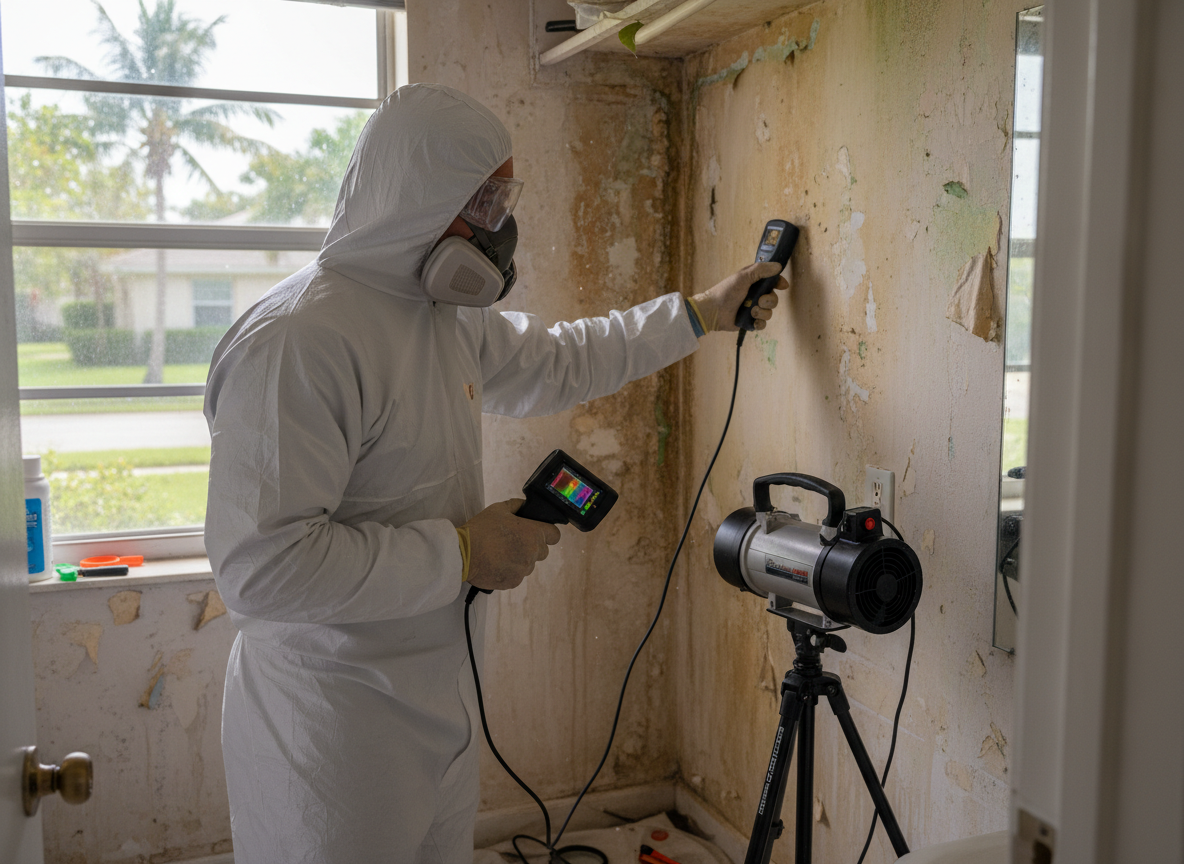
Our mold inspection service helps Delray Beach homeowners find out whether mold is present after water damage or a musty smell, how far it extends, and which moisture source may be feeding it. An inspection is an assessment. It produces a written picture of the findings, which is the basis for any later remediation decision. Our inspection work does not include remediation, so if growth is found, the written scope is the document a remediator would follow.
Why Delray Beach Homeowners Choose Us
Our office is in Boynton Beach at 503 E Boynton Beach Blvd, just north of Delray, so we are a short drive from Delray addresses and work with the same humidity, coastal and rainfall conditions that shape water damage across this part of Palm Beach County. Choosing a restoration company is a decision about process as much as speed, so our approach starts with documentation. We photograph conditions as we find them, record moisture readings, and keep a drying log that shows what changed and when. Those records help you speak with insurers, property managers or family members with the facts in hand. Many Delray homeowners are 65 or older and at home during the day when leaks are found, so we keep the documentation clear enough to follow without technical background. Our inspection work is also honest about its limits. An assessment shows what can be seen and measured at the time, and we say so plainly rather than promising outcomes. Before work proceeds, you get a clear explanation of each step. To start that conversation, call (561) 639-0725.
Why Water Damage in Delray Beach Should Not Wait
Water damage rarely stays where it starts. In a closed-up or part-year home, moisture can sit inside walls, under flooring and behind cabinets for days or weeks before anyone sees a stain or smells something wrong. That is a risk pattern rather than a fixed outcome, but it is why early action matters. Materials that stay wet longer are more likely to warp, swell or support mold growth, and each extra day can add drying work. An empty home also loses the chance to catch a small leak before it spreads. Shared structures add another layer. In a condominium or community building, water from one unit can reach units below or beside it through ceilings, shared walls and common plumbing, so finding the source quickly limits how far the problem travels. Wet-season conditions add pressure. Saturated ground, high tides and tropical weather can all bring water toward a home at a time when indoor humidity is already high. If you find water in Delray Beach, first protect people and keep clear of any electrical hazards. Then document what you see and call (561) 639-0725 so that drying can start while the damage is still limited.
Water Damage Questions Delray Beach Homeowners Ask
We found water damage after being away. What should we document first?
Start with photographs and video of every affected area as you find it, including the source if it is visible, the floors, walls and ceilings, and any water lines or staining. Write down the date and time you found the problem and when the home was last occupied. Keep a simple log of who entered the home and when, since that timeline helps explain the event. Photograph damaged items before moving or discarding them, and keep receipts for any emergency steps you take. If it is safe and you know how, shut off the water supply to the leaking line. Once the record is complete, call (561) 639-0725 so the team can locate the source and begin drying.
Does a condo water leak work differently from a house leak?
The core process is the same: find the source, remove water, dry the structure and document the results. The difference is mostly in access and coordination. Water often moves through shared ceilings, walls and plumbing stacks, so the affected space can extend into a neighboring unit. Building management or an association may need to be contacted to arrange access to common areas or adjoining units. Units above or below may also need checks, which we scope once the source is confirmed. Scope and timing depend on those details, so we confirm access and who authorizes the work before drying begins.
How much does water damage restoration cost in Delray Beach?
Cost depends on the job, not on a fixed rate. The main factors are how much water is present, how long it has been there, which materials are affected, whether the water came from a clean or contaminated source, the size of the affected area, and how much drying equipment and monitoring the job requires. Access, flooring type and whether structural materials must come out also shape the scope. This page does not quote prices. The picture becomes clearer once the source is found and the affected areas are measured and documented.
Should we get a mold inspection if the leak was weeks ago?
Often yes, especially when water sat for weeks, when a musty odor is present, or when staining or bubbling shows on walls or flooring. An inspection establishes whether growth is present, where it extends and what moisture source may be feeding it. It cannot promise that mold is absent, because growth can sit behind surfaces and out of sight. The findings describe conditions on the day of the visit, so any follow-up depends on what the inspection finds. If growth is found, the written findings guide any later remediation decision. Call (561) 639-0725 to talk through timing for your situation.
What does the restoration process actually involve?
Restoration usually begins with locating the water source and stopping it. Standing water is extracted, and materials are dried. Moisture readings are logged throughout the job to verify dryness, and the work is complete once the readings show the structure has reached target levels. Findings are documented at every step of the job, and each stage is explained before the next one begins.
Is water from a storm or king tide handled differently from a pipe leak?
The first steps are similar: document, remove the water and dry the structure. Storm and tidal water can carry more contamination and can reach more of a home, so the assessment often takes longer. Floods can also raise permit and repair-scope questions, which we confirm for the property before any permitted work begins. Local rules can differ by property, so we check which requirements apply before scoping repairs.
Get Help for Water Damage in Delray Beach
If water has reached your Delray Beach home, call (561) 639-0725. Tell us where you found the water, how long it has been there and whether anyone is at the property. We will walk you through what happens next and how the job is documented. Ask any question before the work begins. Or see the contact page for how to reach us.