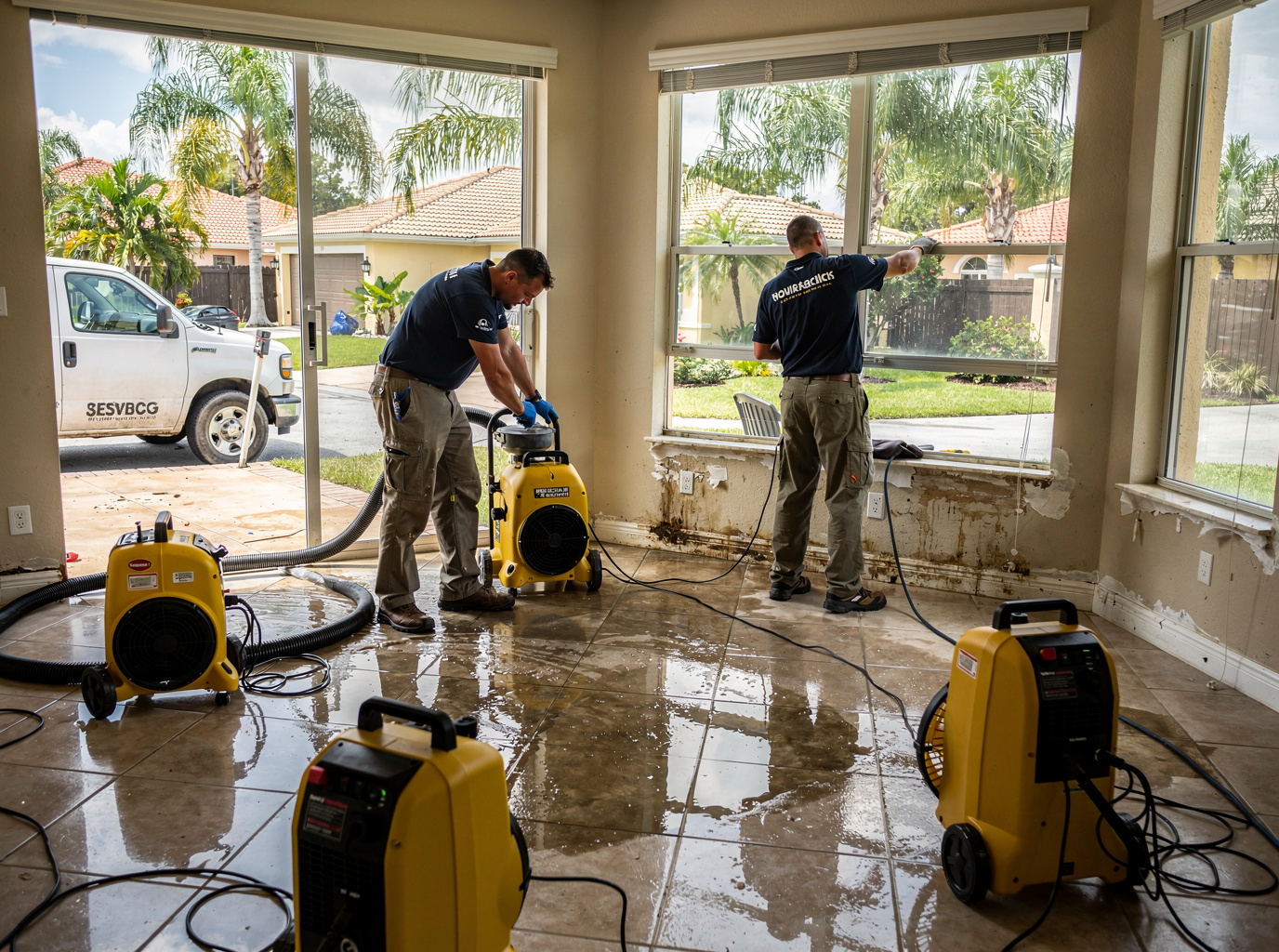
Lantana is the smallest of the six towns we serve, with 12,449 residents as of July 1, 2025, and the fastest growth rate among the Palm Beach County places we checked, at 6.7% since April 2020. The town sits on the Lake Worth Lagoon and Intracoastal shore, directly north of Boynton Beach, and its streets run low toward the water. In a dense little town like this, a burst supply line can reach a neighbour's ceiling quickly. Water damage restoration in Lantana starts with the first hours: getting the water out, finding where it came from, and keeping the damage from spreading.
Water Damage in Lantana: The Local Picture
Homes Packed Into a Small Footprint
Lantana had 4,881 households in the 2020–2024 Census estimates, spread across 2.37 square miles, with an average of 2.42 persons per household. Between April 2020 and July 2025 the population grew 6.7%, which puts pressure on a small housing stock. More households share the same limited land and the same local streets. For water damage, density matters because a leak in one unit or one yard does not stay there for long. Water moves into neighbouring rooms, under shared floors and along connected spaces. If a pipe fails in a shared wall or a closely spaced structure, the water has more neighbouring surfaces to reach before anyone notices a stain. When we assess a Lantana property, we look at how far the water has travelled, not only at the spot where the damage is visible.
Who Owns the Decision
About 52.9% of occupied homes in Lantana are owner-occupied, which means nearly half are rented. That split changes who makes the first call after water damage. A homeowner may decide alone. A renter may be the person who finds the leak, while the landlord or property manager holds the authority to approve drying, the keys and the relationship with the insurer. Before any removal or drying work begins, we confirm who is authorising the work, who can grant access to the unit, and who should receive the moisture readings and photographs. Settling this on the first call matters because drying equipment should not be placed in a unit until someone with authority has agreed to it. Tenants, landlords and managers each have a role, and we work with whoever holds the decision for your property.
Coastal Setting and Year-Round Failures
Lantana sits on the Lake Worth Lagoon and Intracoastal shore. Its low streets mean that storm surge, high tides and heavy rain can all reach ground floors. This is the coastal water most people picture, and it is a real concern on this shoreline. Plumbing and air conditioning failures are just as real, and they happen all year regardless of tide. A water heater fails, a supply line bursts, or an air conditioner's condensate line clogs and overflows. Palm Beach County's wet season and hurricane season overlap in summer and autumn, which is when rain and coastal water can arrive together. Low streets near the lagoon shore can take rain and tidal water in the same wet weeks. A ground-floor home on a low Lantana street can face both kinds of water in the same season.
Permits: What We Confirm and What We Do Not Assume
Some water damage repairs need a building permit, and whether one is required depends on the property's jurisdiction and the scope of the work. Permits, where required, are confirmed for the specific property's jurisdiction before any permitted work is scoped, so the plan reflects what applies to that address and not to a neighbouring one, even on the same street. We do not assume that rules from another Palm Beach County city carry over to Lantana, and we do not apply another city's floodplain or repair standards to a Lantana property. If a permit is needed, we will tell you before the work is scoped. If none is needed, we will say so and explain why. A confirmed answer for your address is what you should expect, not a general promise.
Water Damage Services in Lantana
Water Damage Restoration
Water damage restoration covers the full job after water enters a Lantana home. It includes water removal and extraction, storm damage response, structural drying and leak detection to find the source. We start by getting standing water out and documenting the affected areas as we find them. Structural drying follows, with moisture readings taken at set points until the materials reach dry standards. Where a leak is hidden behind a wall or under a floor, we detect its source before the area is closed up. Read the full process on our water damage restoration page.
Mold Inspections
A musty smell, dark staining or a leak that was never fully dried can point to mold growth. Our mold inspections in Lantana establish whether mold is present, how far it reaches and which moisture source is feeding it. The inspection produces a written record of what was found, which is the picture any later remediation decision depends on. Our service is the inspection itself, not the removal. Learn how the inspection works on our mold inspections page.
Why Lantana Homeowners Choose Us
Our office is at 503 E Boynton Beach Blvd in Boynton Beach, a few minutes south of Lantana, so our crews know the coastal and wet-season conditions that Lantana streets face. Our process is documented from the first call to the final drying log. We record the damage as found, take moisture readings, dry the affected materials, and keep the photographs and logs you may need for your own records or an insurance claim. We work from what we measure, not from assumptions about how far the water has gone. If an inspection finds less damage than you expected, or more, we say so plainly and show the readings behind the finding. Each finding is recorded in writing with readings the owner or landlord can keep. To reach us, call (561) 639-0725.
Why Water Damage in Lantana Should Not Wait
Standing water does not stay where it lands. Within hours it can soak into flooring, drywall and subfloor, and it moves through gaps that connect one room to the next. In a town with homes this closely spaced, a leak in one unit or one yard can reach neighbouring spaces before anyone sees a stain. Damp materials that are left alone keep holding moisture, and that moisture is what allows mold to take hold on wood, drywall and carpet backing. The damage grows while the source keeps running and the water stays undiscovered.
The renter share adds a practical problem. With nearly half of Lantana homes rented, a tenant may notice the water first and wait for the owner or manager to respond. Every day of delay is another day the materials stay wet. If you rent in Lantana, report any water to your landlord or property manager in writing right away, and ask who will authorise drying so the work can begin.
The wet season adds pressure. When rain falls on low streets, storms push water inland and the ground is already saturated. Waiting through those weeks lets a manageable leak become a larger repair, so the time to act is when you first see the water, not after the next storm.
Water Damage Questions Lantana Homeowners Ask
I rent in Lantana. Who should call about water damage, me or my landlord?
Either of you can call, and the right first step is to tell the other party in writing at once. The landlord or property manager usually authorises drying work and access to the unit. As the occupant, you can report the water, photograph what you see and keep a record of when it started. Call us with whoever is available, and we will confirm who has authority before any work is scoped.
How fast is Lantana growing, and does that affect older plumbing?
Lantana's population was 12,449 as of July 1, 2025, up 6.7% since April 2020. Growth adds households to a small town, but it does not change how plumbing fails. We do not have a housing-age figure for Lantana, so we will not guess at how old its plumbing is. What we can say is that water heaters, supply lines and air conditioner condensate lines fail year-round, whatever the age of the building.
Does Lantana flood like the barrier island?
Lantana's water exposure comes from its own position on the lagoon shore it sits on, and it is not the same as every other coastal town. Its low streets can take water from storm surge, high tides and heavy rain, and how much a given property is exposed depends on its location and elevation. We do not have a published flood frequency for Lantana to quote, so we will not give one. The honest answer is that low streets can take water when conditions line up.
What happens during water damage restoration?
We start by getting standing water out with extraction and removal equipment. Next we document the damage as found, then take moisture readings to map where the water has gone. Drying equipment runs until the readings show the materials are dry, and we check again before the job closes. If the source is not yet known, we detect it, and the photographs and drying log go to you for your records.
How much does water damage restoration cost in Lantana?
We do not publish prices on this site, so the honest answer is the factors that drive the scope. These include the type of water involved, how far it has spread, which materials are affected, how long drying takes, and whether a leak must be found and then repaired by a plumber. The scope for your home is set after we see the damage, and we will explain each factor in plain terms.
Should I book a mold inspection after a leak in Lantana?
If water sat in the building for a long time, or you notice a musty smell or dark staining, a mold inspection is worth booking. The inspection establishes whether mold is present, how far it reaches and what moisture source is feeding it. It also gives you a written record to use for any next step. You can read how it works on our mold inspections page.
Call About Water Damage in Lantana Now
If water has reached your Lantana home, call (561) 639-0725 now. Tell us what you see, where the water came from if you know, and whether water is still coming in. We will explain what happens next and who needs to approve the work. You can also reach us through our contact page.