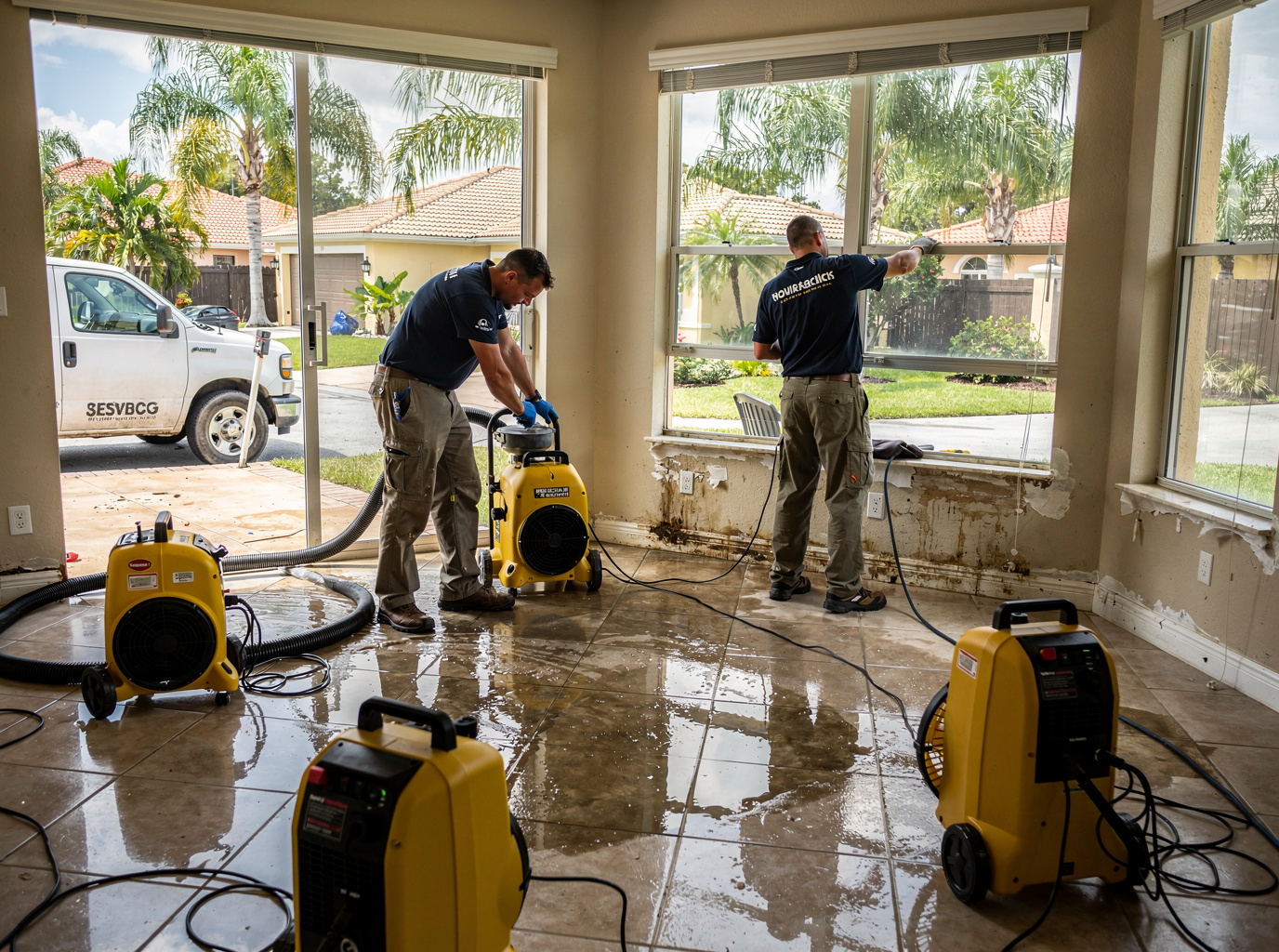
Wellington is the western edge of our service area, an inland village in western Palm Beach County and the farthest community we serve from our Boynton Beach base. Water damage here is mostly a story of rain, drainage and plumbing rather than tides. A heavy storm can push water across flat ground, a canal can run high, and a supply line can fail on an ordinary weekday. Water damage restoration in Wellington means getting the water out, drying the structure properly, and recording each step so you have a clear account of what happened. If water is in your home now, call (561) 639-0725 and describe what you see.
Water Damage in Wellington: The Local Picture
Western Palm Beach County's Wet-Season Water Profile
Western Palm Beach County receives most of its heavy water during the wet season, when afternoon storms can drop a large amount of rain in a short window. Water moves through the drainage ditches, canals and retention areas that carry it away from neighbourhoods. When those systems are full or slow, water finds the nearest low point. For a home, that can mean water at the slab edge, under a garage door, or pooled against a wall that has never seen water before. Hurricane season overlaps with the wet season, so a tropical system can bring wind-driven rain while the ground is already full. Wellington homeowners often notice this first because the water arrives from outside the house. That is why our assessment covers the grounds, the exterior and the drainage around the home as well as the rooms inside.
The Plumbing Baseline in Larger Single-Family Homes
Many Wellington homes are larger single-family houses, and that layout changes where water damage starts. A house with more rooms, longer runs of supply line and a more spread-out floor plan has more hidden places for a leak to go unnoticed. Water heaters in attics, garages or utility closets can fail without warning. Supply lines to sinks, toilets and refrigerators can weaken over time. Air conditioning condensate drains can clog and overflow the pan, soaking a ceiling or floor below. Dishwashers and washing machines add their own risk when hoses or valves age. These leaks often start small and out of sight: a stain on a baseboard, a soft patch in the flooring, or a faint damp smell in a closet. By the time someone notices, water may have travelled under flooring and into wall cavities. Calling early shortens that path.
Scoping a Drying Job at the Far Edge of Our Area
A drying job in Wellington follows the same method we use everywhere we work. On arrival, the crew walks the property, identifies the water source if it is still active, and maps the affected area with moisture readings taken at set points. We photograph conditions as found before anything is moved or removed. The drying plan is set for the specific materials and rooms involved, and each visit ends with the readings recorded, the photographs saved and the equipment placed according to that plan. Before we leave, we note what has been dried, what still needs attention and when the next readings should be taken. Nothing is left as a verbal promise. The goal is a complete record from the first visit, so no part of the job depends on memory or guesswork later on.
Permits: An Honest Jurisdiction Line
Permit requirements for repair work depend on the jurisdiction that governs the property, and Wellington is an incorporated village, and permit requirements depend on the jurisdiction that governs the property. We do not assume that the requirements for a home in another city apply here. Before permitted repair work is scoped in Wellington, we confirm which jurisdiction the property falls under and what that jurisdiction requires for the specific work involved. Which steps need a permit depends on the scope, so we check each job rather than assume. Asking the question at the start avoids surprises later, both for the homeowner and for any insurer reviewing the file. If you are unsure what your local office requires, raise it during your call. We will tell you what we know and what still needs to be confirmed with the village before work begins.
Water Damage Services in Wellington
Water Damage Restoration
Our water damage restoration service covers the whole job after water enters a Wellington home. That includes water removal and extraction, structural drying, moisture verification and the leak detection needed to find the source. Leak detection is part of the same visit, because drying will not hold if the source keeps running. Each step is recorded with photographs as found, moisture readings and drying logs that show how the job progressed. That record is useful when you deal with an insurer or plan repairs with a contractor.
Mold Inspections
Water that stays damp inside a Wellington home can encourage mold growth, so a musty smell or a dark spot after a leak is a reason to look closer. Our mold inspections service establishes whether mold is present, where it is, how far it extends and where the moisture came from. The inspection produces a written picture of what was found. An inspection does not replace the work that follows. We describe what we find and what it means for the home, and we do not turn an inspection into a sales pitch.
Why Wellington Homeowners Choose Us
Our process is the same at the western edge of our service area as it is closer to our Boynton Beach office. We document before we disturb anything, so the condition you see at arrival is recorded before we move furniture or remove materials. We explain what we find, show the readings that support each decision and keep a written log of the drying plan as the job moves forward. You receive a record you can keep, whatever happens with your insurer. We do not treat a job as less important because it is farther from our base. A Wellington homeowner gets the same questions asked, the same readings taken and the same written summary at the end of each visit as anyone else we serve. To start, call (561) 639-0725 and tell us what happened, when you noticed it and whether water is still coming in.
Why Water Damage in Wellington Should Not Wait
Water that stays in a home does not stay where it landed. It soaks into drywall, wicks up baseboards, moves under flooring and settles into insulation and wall cavities. Once moisture is trapped in those places, it keeps materials damp long after the surface looks dry, and that is the condition in which mold, rot and staining begin. In Wellington, the risk grows when the rain keeps coming. A small leak that seeps into a wall during one storm can be wetted again by the next, and each cycle leaves the materials a little more saturated. Heavy rain on already saturated ground can also push water back toward the foundation, so a minor issue last week can become a larger one this week. Hurricane season adds wind-driven rain to that pattern, sometimes at the moment a roof edge, window seal or door threshold is already weak. Acting early keeps the damage in the area that first got wet. Waiting gives moisture time to spread into framing, flooring and the air inside the home, where it becomes harder and more expensive to remove. If you see standing water, smell dampness or notice a new stain, make the call now. A written assessment on the first visit is the best way to learn whether the problem is contained or still moving.
Water Damage Questions Wellington Homeowners Ask
Does being inland change what water damage restoration involves?
The core steps stay the same: remove the water, dry the structure, verify the drying with readings and document the work. What changes inland is where the water usually comes from. In Wellington, the common sources are rain pooling against the home, drainage that backs up, canals running high and plumbing or appliance failures inside the house. Because the source is not always a storm surge or a tide, we check the grounds and exterior as well as the interior, and we trace the route the water took into the home.
Heavy rain is forecast again this week. What should I protect after a leak?
Start with safety. If water is near outlets, fixtures or appliances, stay out of it and turn off power at the breaker only if you can do so safely. If the leak comes from a supply line or appliance, shut off the water at the nearest valve or the main valve. Move furniture, rugs, electronics and boxed items out of the affected area and lift what you can off the floor. Photograph the damage before you move or clean anything, since those photos help document the loss. Then call us so the source can be found and a drying plan can be set.
How much does water damage restoration cost in Wellington?
We do not publish prices on this website. The final cost depends on the source of the water and how much got into the home, how many rooms and materials were affected, what type of water is involved, how long it stayed in the structure, and how much drying equipment and monitoring the job requires. Those factors become clearer once the assessment is complete and the readings are recorded. Call (561) 639-0725 to talk through your situation, and we will explain the factors that apply to your home.
Should I get a mold inspection after the home is dried?
Often, yes. Drying removes standing water, but it does not confirm that hidden materials are dry or that mold has not started. An inspection after drying looks at the areas that were wet, checks for visible growth and musty odours, and helps you see whether anything still needs attention before rebuilding. If the inspection finds growth, the written findings give you a clear basis for deciding on the next step.
What documentation will I have for my insurer?
Each visit produces a record that can support a claim conversation. That includes photographs of the damage as found, moisture readings across the affected area, drying logs showing how conditions changed over time, and a summary of the work performed. We provide this documentation so you have it for your own records. We cannot promise how an insurer will decide a claim, but a complete and organised record makes the work easier to review.
Do I need to move out while the drying is underway?
That depends on how much of the home was affected and where the work is taking place. We explain the expected conditions during the assessment, including noise from equipment, access to rooms and any areas that should be kept clear. Tell us how you plan to use the home during the job, and we will factor that into the drying plan.
Call Us About Water Damage in Wellington
Water damage in Wellington is easier to contain when it is caught early. If water is moving through your home now, or you have noticed a stain, odour or soft flooring after a storm, call (561) 639-0725. We will ask a few questions about the source and the affected rooms, explain what we would do next and point you to the right service. You can also visit our contact page to find our phone number and business address.