Boynton Beach is a coastal city of 82,396 residents on the Intracoastal Waterway in Palm Beach County, and its water damage comes from several directions at once. Plumbing and appliance failures happen year-round. Heavy rain, storm intrusion and tidal water on low east-side streets add risk during the wetter months. This page explains the local picture for water damage in Boynton Beach, how City rules affect repairs, and how to reach our team at (561) 639-0725.
Water Damage in Boynton Beach: The Local Picture
The city's housing mix, floodplain rules and coastal geography shape how a water loss starts, who makes decisions about it, and what repair work requires. The four points below set out those local facts, using figures from the U.S. Census and the City of Boynton Beach.
Who Lives in Boynton Beach's Homes
Boynton Beach has 32,882 households, and about a third of its occupied homes are not owner-occupied. Owner-occupied homes make up 64.7% of the city's housing, and that split changes who starts a water damage job and who signs off.
- Owners usually make the decisions themselves, from drying and repairs to insurance paperwork, and they often know the history of the house.
- Landlords and property managers often approve restoration on rented homes, so access, scope and cost decisions pass through a second party.
- Tenants are often the first to notice a leak, a stain or a musty smell, but they may not control the repair. Reporting it promptly and in writing protects the household and keeps the record clear.
- All parties benefit from agreeing on who approves the work before the crew arrives, because that keeps the job moving from the first visit.
Floodplain Rules and Building Permits
Parts of Boynton Beach sit inside the Special Flood Hazard Area, which FEMA Flood Insurance Rate Maps delineate. Inside that area, the City's rules reach further into repair work than many owners expect. Repairs that look small can still fall under these rules, so confirm the flood zone early.
- A Building Division permit is required for all development in the Special Flood Hazard Area, and the City's definition expressly includes repair and remodeling of buildings.
- New and substantially improved residential structures must have the lowest floor at base flood elevation plus one foot.
- Substantial improvement and substantial damage are both defined at 50% of market value, and both are held to the same flood-protection standards as new structures.
- An Elevation Certificate prepared by a professional engineer or surveyor is part of the permit record, so the documentation matters as much as the construction.
How Water Gets Into Boynton Beach Homes
Water reaches Boynton Beach homes through three main routes, and each one calls for a different first response. Knowing the route helps the crew find the source faster.
- Plumbing and appliance failures: burst supply lines, water heater failures, dishwasher and washing machine hose leaks, ice-maker lines and AC condensate overflow can happen in any month of the year.
- Storm and heavy-rain intrusion: roof leaks, wind-driven rain and water pooling against the foundation can reach lower rooms, especially during the wet season and during hurricane season.
- Tidal water on low east-side streets: homes on low-lying blocks near the Intracoastal can take on water during high tides and coastal storm events. This is a geographic exposure rather than a fixed schedule.
- Each source leaves a different trail of evidence, so documenting the water's source is part of the job from the first visit.
What Happens After Water Gets In
Water damage restoration is a sequence rather than a single visit, and each stage builds on the one before it. The stages below describe how the work moves from standing water to verified dryness, and where a separate mold question may appear later.
- Extraction removes standing water first, because water left on floors and in wall cavities keeps materials wet and spreads moisture into other rooms.
- Structural drying uses air movers and dehumidification to bring moisture down across affected walls, floors and contents over the drying period.
- Moisture verification takes readings across floors, walls and subfloors, so the team can confirm that materials have reached dry targets before the job is closed.
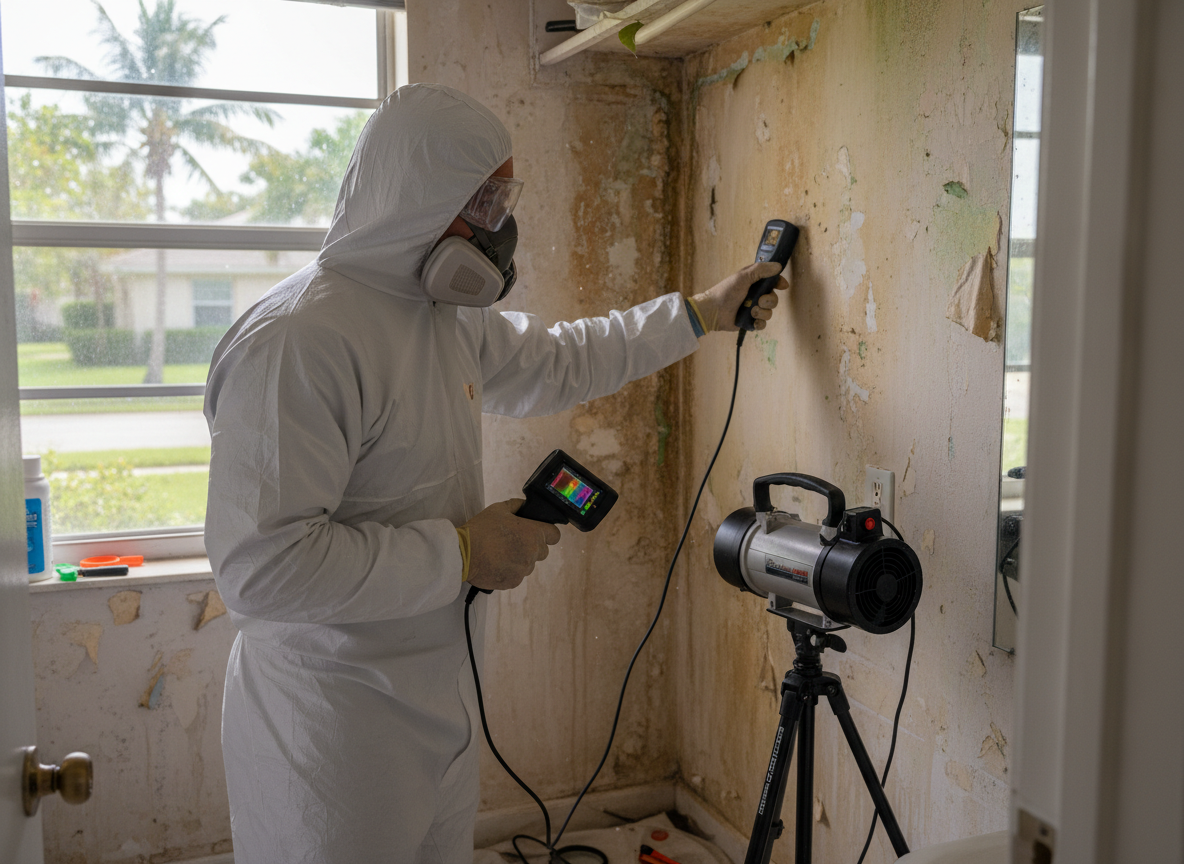
- A post-leak mold inspection is a separate, later question. If a musty smell or staining remains after drying, an inspection establishes whether mold is present and how far it goes.
Water Damage Services in Boynton Beach
Two services cover water damage in Boynton Beach. Restoration handles the water, the drying and the documentation, while inspection answers whether mold has taken hold after moisture problems. Each service has its own page with the full process.
Water Damage Restoration
Water damage restoration covers water removal, water extraction, storm damage and water leak detection. The work starts with finding the source, removing standing water, drying the structure and documenting conditions as they are found. Where a repair falls under the Special Flood Hazard Area permit rules, permits are handled through the City's Building Division. Read the full process on the water damage restoration page.
Mold Inspections
Mold inspections establish whether mold is present, where it is and what moisture source is feeding it, after water damage or a musty smell. The result is a written picture of the findings. This service is inspection only, so it does not perform mold remediation. Where removal is needed, the written findings guide that separate step. See the mold inspections page for how an inspection works.
Why Boynton Beach Homeowners Choose Us
Where Special Flood Hazard Area rules require a permit, permits are handled through the City's Building Division at City Hall, 100 E Ocean Avenue. Our process also produces documentation for each job: photos of conditions as found, moisture readings taken during drying, and notes on the water source, so you can see what was recorded at every stage. We tell you plainly what each service covers and where its limits lie. Restoration dries and repairs the damage, and an inspection answers whether mold is present, so that division of work helps you choose the right step first. If a musty smell remains after a restored room has dried, a post-drying mold inspection is presented as a separate question for you to decide. Our business address is 503 E Boynton Beach Blvd, Boynton Beach, FL 33435. Call (561) 639-0725 to talk through your situation with our team.
Why Water Damage in Boynton Beach Should Not Wait
Standing water and trapped moisture cause damage that grows the longer they stay in place. In the Special Flood Hazard Area, repair work requires a City Building Division permit, and restoration cost reaching 50% of pre-damage market value counts as substantial damage. With 64.7% of homes owner-occupied, owners and renters each have a role in approving the work, and tidal water adds exposure on low east-side streets with no fixed schedule.
Wet flooring, drywall and insulation can swell, warp, stain or lose their structure. Carpet pads and subfloors hold water long after the surface looks dry. When moisture stays inside wall cavities, microbial growth becomes a risk. That risk is a possibility rather than a certainty, and it rises the longer materials stay wet.
Inside that area, waiting raises the stakes. Decisions made after materials are torn out can complicate that scope, while early photos and moisture readings keep the record clear for the City and the homeowner.
The wet season and the Atlantic hurricane season overlap in summer and autumn. Storms and heavy rain can arrive while a home is still damp, and a second event can reach materials that never fully dried. Booking the first response promptly gives the drying work the best chance to finish before the next weather event.
Water Damage Questions Boynton Beach Homeowners Ask
These answers draw on the City's floodplain rules, the city's housing mix and the general restoration process. They are general information, not legal advice, and the City's Building Division has the final word on permit questions. Check your property's flood zone before making decisions about repairs.
Do I need a permit to repair water damage in Boynton Beach?
Yes, if the home is inside the Special Flood Hazard Area. The City's Building Division requires a permit for all development there, and the City's definition expressly includes repair of buildings. Confirm your property's flood zone with the Building Division at City Hall, 100 E Ocean Avenue, before repairs begin. Ask early, because a permit question found after demolition is much harder to resolve.
What does the 50% substantial damage rule mean for my flood repair?
Inside the Special Flood Hazard Area, a building counts as substantially damaged when the cost to restore it equals or exceeds 50% of its pre-damage market value. That status brings the same flood-protection standards that apply to new construction, so the repair may need more than a like-for-like fix. Document the damage as found and confirm the scope with the City before rebuilding.
I rent my home. Who arranges water damage restoration?
Usually the property owner or manager approves restoration work, while the tenant reports the damage quickly. About a third of occupied homes in Boynton Beach are not owner-occupied, so this arrangement is common. Tenants should photograph the damage, report it in writing and ask the owner or manager to confirm who is arranging the drying. We can explain the process to either party so that approvals do not stall the work.
How much does water damage restoration cost in Boynton Beach?
Cost depends on several factors: how much of the property is affected, the water category, which materials are wet, how easily the crew can access the space, and how long drying takes. Clean water from a supply line usually involves a different scope than water that has passed through sewage or floodwater. Ask for the work and the drying plan to be written out so you can compare the scope, not just the total.
Should I get a mold inspection after the drying is done?
Often, yes, especially if a musty smell, staining or moisture returns after drying. Drying addresses the water, but an inspection establishes whether mold has grown, where it is and what moisture source is feeding it. Our mold inspections service covers that question as a separate step, and any remediation is handled by a different provider.
Talk to Our Boynton Beach Team
If water has reached your Boynton Beach home, call (561) 639-0725 to describe what you see and where it may be coming from. You can also visit our contact page for our address and phone details. Have photos, any City permit notices and details of the water source ready, since they help the team understand the situation faster.